
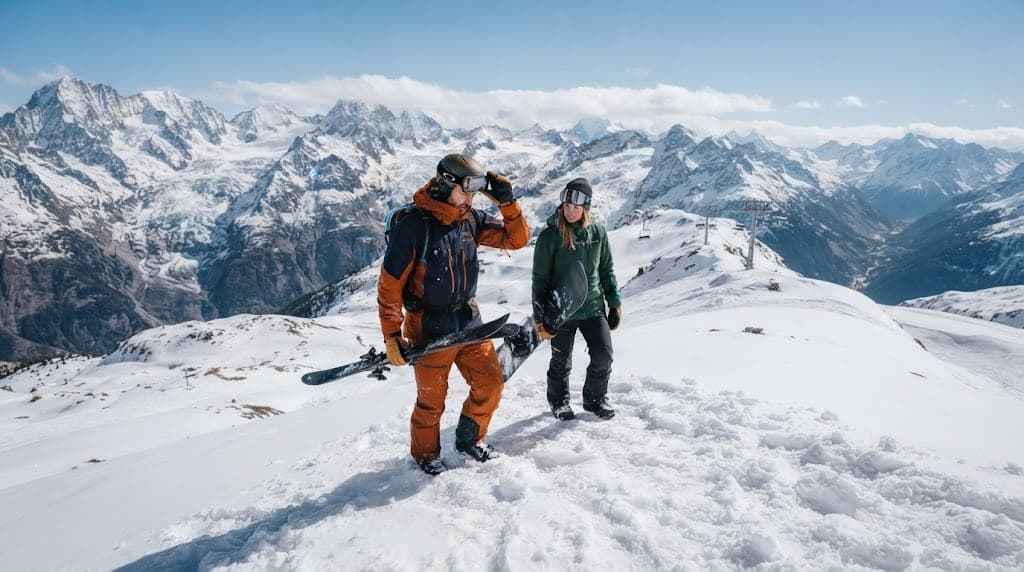

Standing in front of a rail of twenty jackets, every label is an alphabet soup of brand names: Gore-Tex, PrimaLoft, Polartec, Cordura, Thinsulate. It's hard to tell which ones describe the same thing under a different name and which solve genuinely different problems. The good news is that all of those materials fit into a very simple three-layer scheme, and once you understand what job each layer does, the label stops being a mystery. That's what this guide is about: first the system, then the materials, and finally how to read the numbers that actually matter.
In short: dress in layers, never in one very thick garment. A base layer that moves sweat away — merino wool or technical polyester, never cotton — a mid layer that holds heat — fleece or synthetic insulation — and an outer layer that stops water and wind. On the jacket, look for at least 10,000 mm of water column and vents under the arms. And remember that being able to take a layer off at midday is worth more than any expensive material.
Before the materials: the three-layer system
Everything else depends on understanding this, and it's what almost no list of materials explains.
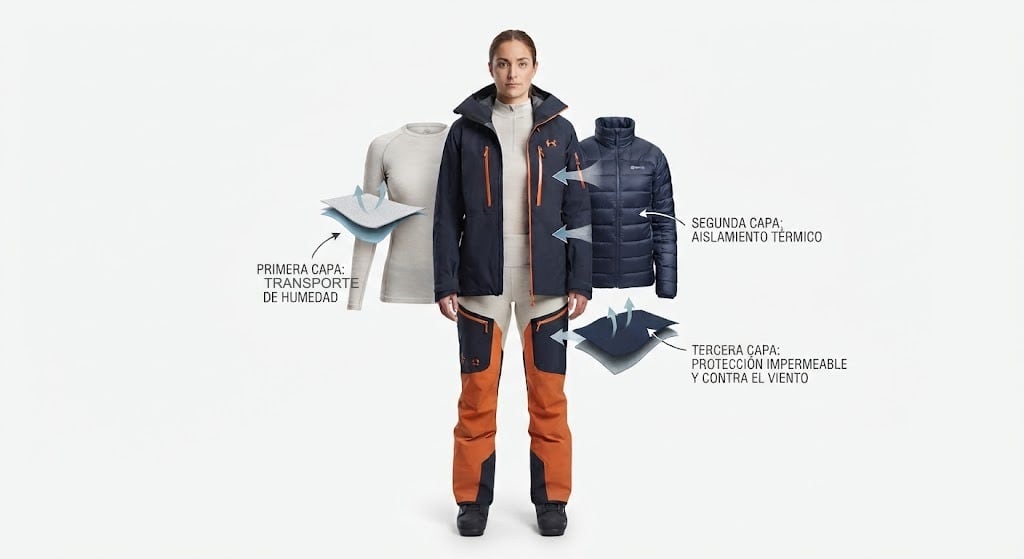
Your body generates heat and moisture while you ski, and the real enemy on a mountain isn't the cold: it's trapped sweat. If you're soaked underneath, your clothing stops insulating and you get cold at the first stop, even in the most expensive jacket in the shop. The layer system solves that by splitting the work three ways:
- Base layer (transport): against your skin, it moves sweat outwards.
- Mid layer (insulation): it traps warm air and holds it.
- Outer layer (protection): it stops water and wind without preventing vapour from escaping.
No layer can do another's job well. That's why one very thick garment always works worse than three thin ones: with layers you can regulate through the day, and on snow the day changes a lot.
Base layer: moving sweat away from your skin
It barely insulates, and that isn't its job. Its job is to keep you dry.
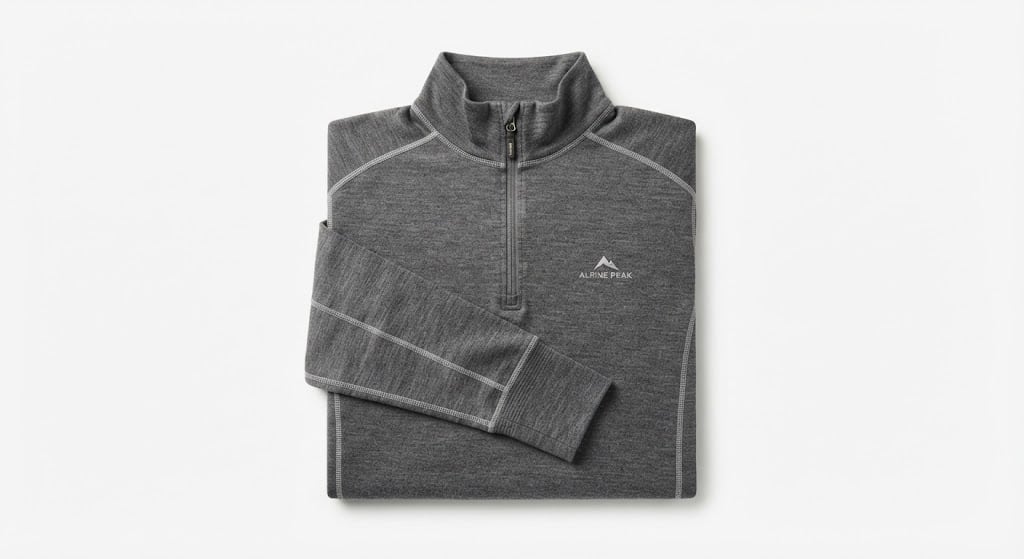
- Merino wool: a natural fibre, fine and non-itchy. It regulates temperature very well, keeps insulating somewhat even when damp and — its great practical advantage — takes a very long time to smell, so it survives several days of a trip. It's more delicate to wash and more expensive.
- Technical polyester: dries faster than wool, is tougher and considerably cheaper. In exchange it picks up odour quickly. This is where brand names like Coolmax come in, a polyester fibre with a modified cross-section that spreads moisture and evaporates it sooner.
- Merino and synthetic blends: they aim for the best of both, and for most people they're the sensible option.
And the most important rule in the whole guide: never cotton. A cotton T-shirt absorbs sweat, holds it against your skin and doesn't dry all day. It's the most common mistake among people coming to their first lesson, and the one that causes the most cold.
Mid layer: holding the heat
This is where how warm you are gets decided, and where you have the most room to adjust to the day.
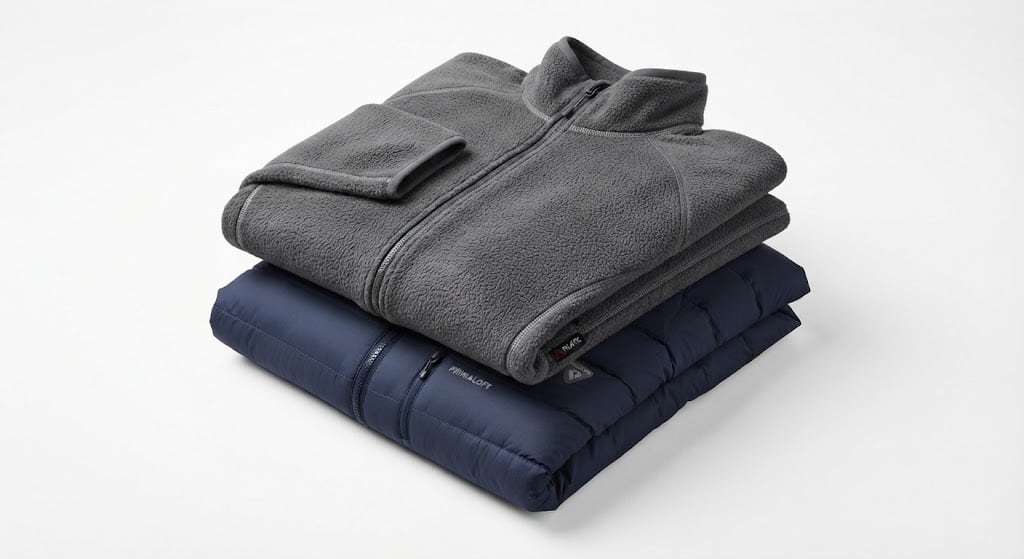
- Fleece: a polyester fabric that traps air between its fibres. Light, comfortable, still warm when wet and quick to dry. It blocks no wind at all, so it needs an outer layer over it. Polartec is the reference brand, though it's worth knowing it isn't a specific fabric but a manufacturer with many different ranges — some designed to move moisture, others to insulate, others to breathe under effort — so "it has Polartec" on its own doesn't tell you much.
- Synthetic insulation: fibres that imitate down. PrimaLoft and Thinsulate are the two names you'll see most. Their great virtue is that they keep insulating when damp, which matters a great deal on snow. Thinsulate stands out for insulating with very little thickness, which is why it turns up so often in gloves, where bulk is a nuisance.
- Down: the best warmth-to-weight ratio there is, unbeatable in dry cold. Its weakness is serious on snow: wet, it clumps and stops insulating. Hydrophobic treatments exist that mitigate this, but for an active day on skis a synthetic is usually better.
- Outlast: not an insulator as such but a regulator. It carries microcapsules of phase-change material that absorb heat when you have too much and give it back when you don't, to smooth out the peaks. It's an interesting technology on very changeable days, not a substitute for insulation.
Outer layer: stopping water and wind
This is the one that separates a good day from a soaked one, and where the brand names pile up.
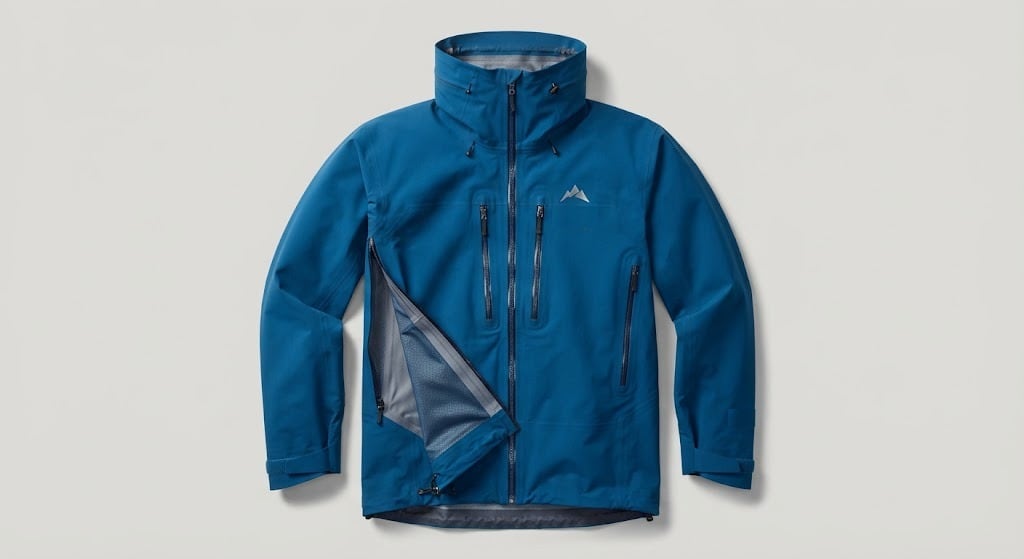
The key is the membrane: a very thin film, laminated to the fabric, with pores small enough that a drop of liquid water can't pass but large enough to let the water vapour from your sweat out. That's where all of this comes in:
- Gore-Tex: the best known membrane and the industry reference. It isn't a fabric: it's a membrane that different brands laminate to their own fabrics. Which is why two Gore-Tex jackets can behave differently.
- eVent: a competing membrane that works slightly differently, allowing air to pass directly. Its makers claim faster vapour removal; in practice the difference depends a great deal on the specific garment and the conditions, so it's worth not taking brand comparisons as absolute fact.
- In-house membranes: nearly every big brand has its own. They aren't necessarily worse; what you should look at are the figures, and that's what the next section is about.
- Windstopper, from the same company as Gore-Tex, prioritises blocking wind while keeping a lot of breathability. Widely used in gloves and mid layers, it isn't designed to hold off melting snow for hours.
- Softshell: it has no waterproof membrane as such. It's a stretchy, comfortable fabric that blocks wind and handles light water, but it isn't a waterproof garment. Perfect for cold, dry days or as a mid layer; not enough for a day of snowfall.
- Neoprene: it insulates very well when wet, but doesn't breathe at all. Which is why it appears on glove cuffs and accessories, not on full garments.
What do the millimetres of water column mean?
This is the practical part that lets you compare two garments without trusting the brand name. It comes down to two numbers.
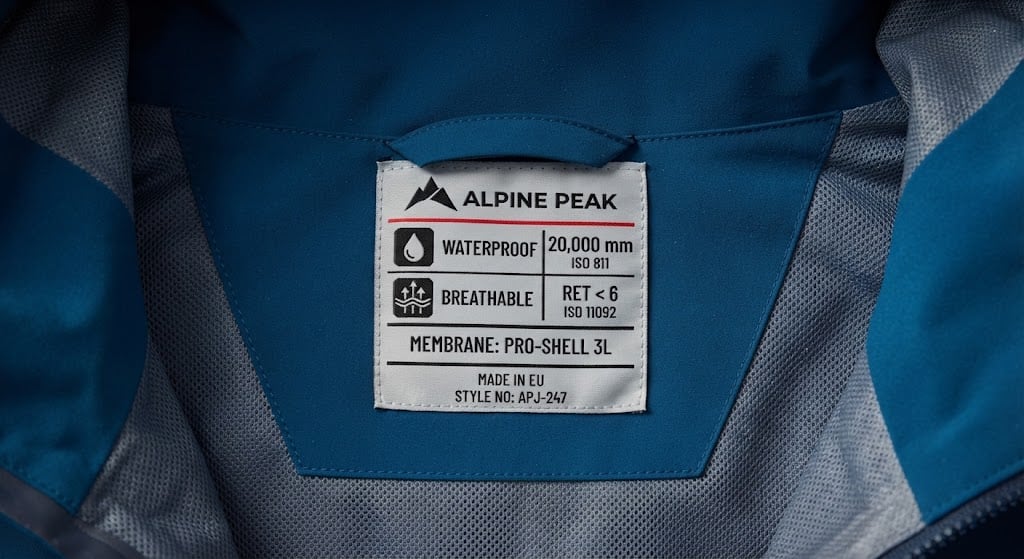
Waterproofing: the water column, in millimetres. It's measured with the standardised ISO 811 test: the fabric is placed under a tube that gradually fills with water, and the height at which water starts to come through is recorded.
| Water column | What it's good for |
|---|---|
| Under 5,000 mm | Basic protection. Not enough for a full day on snow. |
| 5,000 – 10,000 mm | The reasonable minimum for skiing in normal conditions. |
| 10,000 – 20,000 mm | What we'd recommend: it handles heavy snowfall and hours sitting on lifts. |
| Over 20,000 mm | Hard conditions and heavy use. |
There's a nuance almost nobody mentions and it's pure common sense: sitting compresses the fabric and multiplies the pressure. Which is why on trousers, which spend the day against the chairlift and against the snow, the water column matters as much as on the jacket, or more.
Breathability. It's expressed two ways. The usual one on product sheets is in g/m²/24h (how much vapour it lets through; more is better). The more rigorous one is RET, measured to ISO 11092, which works the other way round: less is better. A RET below 6 is very breathable; between 6 and 13 is appropriate for medium-intensity activity, which is exactly a day's skiing.
And one piece of advice worth more than any figure: vents under the arms and on the trouser legs regulate your temperature far faster than any membrane. If you're choosing between two similar jackets, take the one that has them.
Why has my waterproof jacket let water through?
This explains the most frequent complaint we hear about snow clothing: "my jacket was waterproof and I still ended up soaked".
On the outside of the membrane, the fabric carries a durable water repellent (DWR) treatment that makes water bead up and run off. That treatment wears off with use and washing. When it does, the outer fabric soaks through — even though the membrane still works — and two things happen: you feel cold by contact, and the garment stops breathing, because vapour can't cross a saturated outer layer. You end up wet from the inside and blaming the membrane.
The fix isn't buying another jacket: it's reactivating or replacing the DWR. Wash it with a specific detergent — never normal detergent or fabric softener, which destroy it — apply a reproofing product if needed, and put it through gentle heat, a warm tumble dry or an iron with a cloth, which is what reactivates the treatment.
Reinforcement materials
They don't insulate or waterproof: they're there to make the garment last.
- Cordura: a high-tenacity nylon fabric, very resistant to abrasion. It turns up in the areas that suffer most: trouser hems, knees, seat and glove palms.
- Ripstop: not a material but a way of weaving, with a grid reinforcement every few millimetres that stops a small tear spreading. Which is why you can see the grid when you hold it up to the light.
- Aramids: synthetic fibres with very high resistance to cutting and abrasion, used in specific reinforcements. Kevlar is the best-known aramid: it's a brand name for this kind of fibre, not a separate material.
- Aerogel: an ultralight material with extremely high insulating capacity. In snow clothing it's still marginal and expensive, and turns up mostly in insoles, gloves and expedition garments.
What to prioritise in Sierra Nevada
Here the climate pushes your priorities in a particular direction, and it isn't the one a guide written with the Alps in mind would give you.
Sierra Nevada is the most southerly resort in Europe and gets a great deal of sun. Spring starts in March, earlier than at resorts further north, and from then on the pattern repeats: the snow freezes overnight and softens in the sun through the morning. That means wet snow and real water on your clothing for much of the season.
Translated into what to buy:
- Prioritise waterproofing over extreme insulation. Here you get wet more often than you get polar cold.
- Ventilation, close to mandatory: a sunny March day at midday will genuinely make you sweat.
- A thin mid layer that's easy to take off, rather than one very thick jacket.
- Trousers with a good water column, because soft snow soaks you far more than dry snow when you fall.
- Genuinely waterproof gloves, which is where wet snow shows up first. We cover it in the guide to choosing ski and snowboard gloves.
And if you want to see what you're going to find before you pack, you can check the snow conditions in Sierra Nevada.
The mistakes we see most
- Cotton as a base layer. The most common and the easiest to avoid.
- One very thick garment instead of layers. No room to adjust when the sun comes out.
- Too many tight layers. Insulation comes from trapped air: if you're compressed, there's no air and it doesn't insulate. In the same way a thick sock in a tight boot leaves your foot colder, not warmer.
- Washing the jacket with normal detergent or softener, which ruins the DWR.
- Trusting a softshell on a snowy day, because the label says "water resistant".
Before you buy: a quick checklist
- Three layers, not one thick one: transport, insulation and protection.
- A base layer of merino wool or technical polyester. Never cotton.
- A mid layer you can take off with the jacket still on, or nearly.
- A jacket from 10,000 mm of water column, and trousers the same or more.
- Vents under the arms: they regulate faster than any membrane.
- Cordura or reinforcement on hems, knees and seat if you're going to work it hard.
- Detergent made for technical garments, and no fabric softener.
In the end, expensive materials buy you margin, but the system is what keeps you comfortable. Someone with three well-chosen layers and a mid-range jacket will have a better day than someone in the most expensive jacket in the shop with a cotton T-shirt underneath. If you're coming to a lesson with us and you aren't sure what to bring, ask us beforehand: it's cheaper than finding out halfway through the morning.