
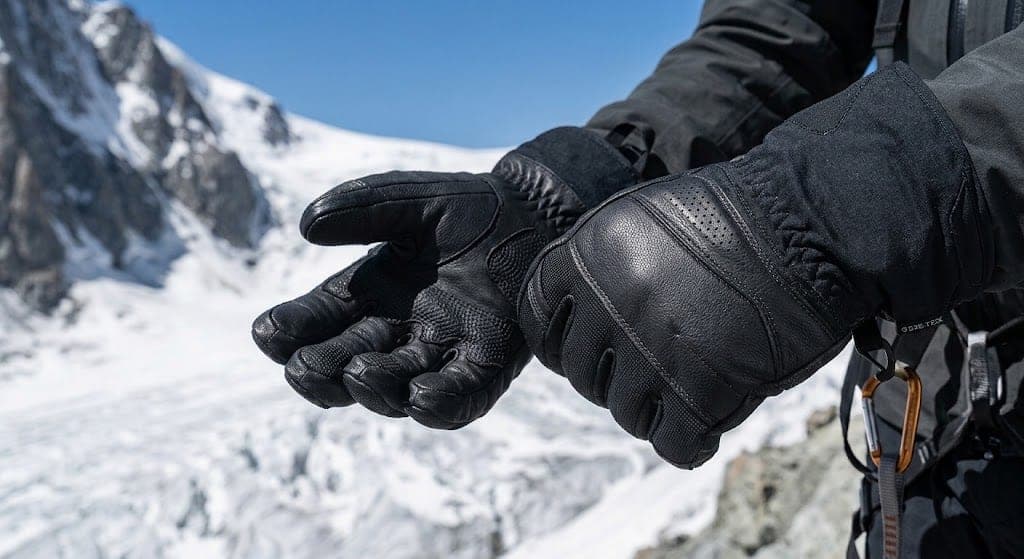

Your hands are the first part of your body to feel the cold on a mountain, and also the easiest to get wet: they grip the pole, they push off the snow when you get up, and they're exposed to the wind on every lift. Badly chosen gloves can ruin a whole day, and not always because of quality — very often it's simply the wrong type or the wrong size. This guide brings together the criteria that genuinely matter: glove or mitten, waterproofing, insulation, sizing, and the details that make a difference on the hill.
In short: for most people, a waterproof and breathable glove with synthetic insulation in a well-fitted size handles 90% of days. If your hands tend to get cold, a mitten is warmer than a glove with the same filling. And watch the size: too tight makes you colder, because it restricts circulation.
Why good gloves matter more than you'd think
Hands have a lot of surface area relative to their volume and little muscle mass generating heat, so they get cold before the rest of you. Add two things specific to snow: constant damp — which draws heat away from skin far faster than dry air — and the wind on the lifts, when you're sitting still and producing no heat.
Beyond comfort, cold and numb hands take away feel and grip exactly when you need them most. Prolonged exposure to hard cold also carries a risk of frostbite, which is reason enough not to improvise with this part of your kit.
Gloves, mittens or three-finger: which to choose
There's no best option in the abstract; it depends on how cold you get and how much dexterity you need.
| Classic glove | Mitten | Three-finger (hybrid) | |
|---|---|---|---|
| Warmth with the same filling | Lower: each finger loses heat separately | Higher: fingers warm each other | In between |
| Dexterity (bag, lift pass, phone) | High | Low | Medium-high |
| Pole grip | The best, which is why it dominates in skiing | Clumsier | Good |
| Most common use | Skiing and general use | Snowboarding, very cold days, children | Anyone who gets cold but needs their hands |
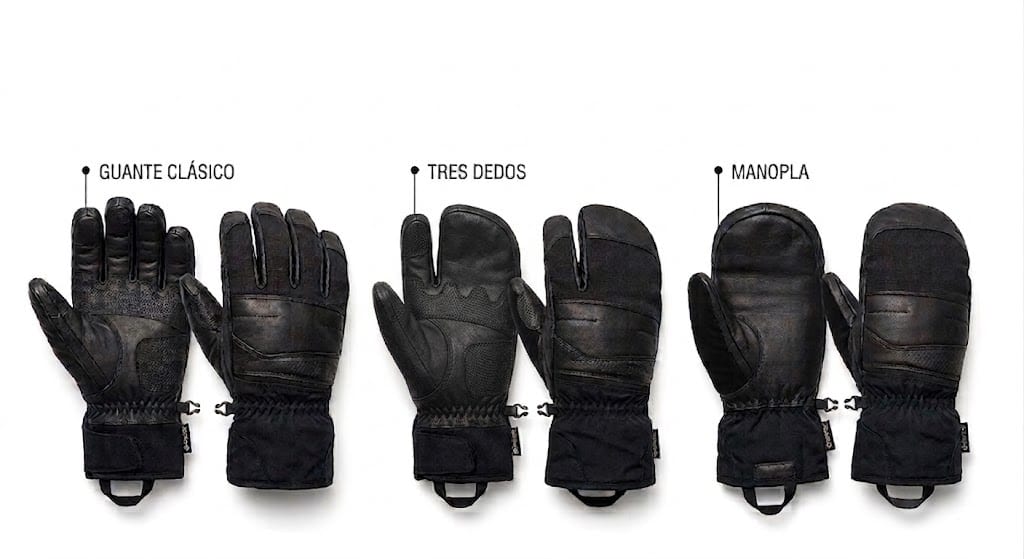
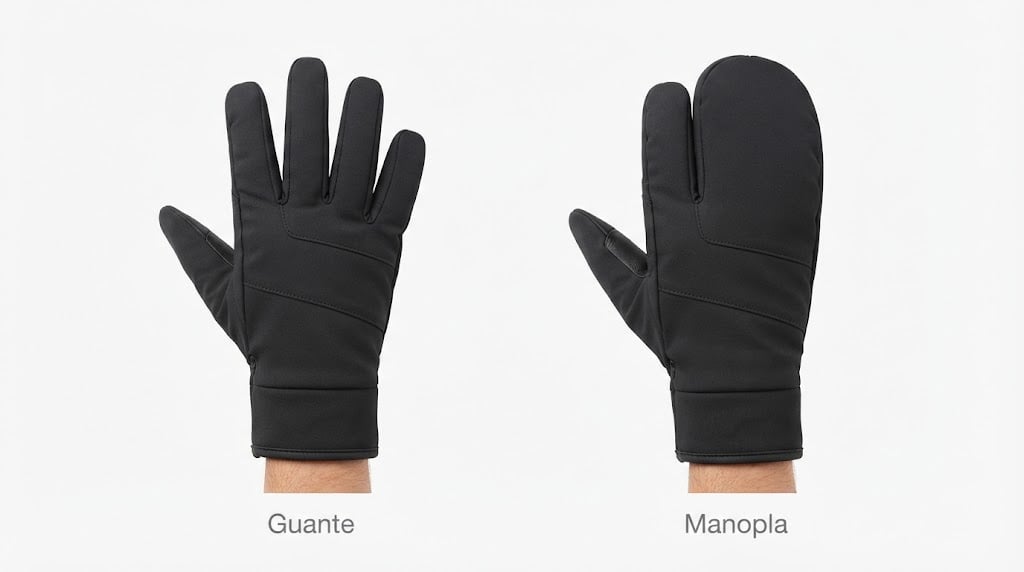
- Classic glove: each finger is protected separately. It's the most versatile option and the most used in skiing, because it lets you hold and plant a pole precisely.
- Mitten: keeps your fingers together, so they hold heat better for the same insulation. Very common in snowboarding — where hands spend more time on the snow — and with children, because they're easier to get on and off. There are models with internal dividers for the fingers, and even convertible ones.
- Three-finger: groups the middle, ring and little fingers together for warmth and leaves the index finger and thumb free to handle things. A very reasonable middle ground if you're torn between the other two.
- Liner gloves: not an alternative but an addition. You wear them underneath on the coldest days, and many gloves already come with a removable inner liner that does the same job and makes drying easier.
What size gloves do I need?
This is the part most people get wrong, and the mistake nearly always goes the same way: buying a size down on the theory that "tighter is warmer". It's the opposite. A glove that pinches compresses your circulation and reduces the pocket of air that holds heat, so you end up colder, not warmer. Too big is no good either: you lose feel and air gets in.
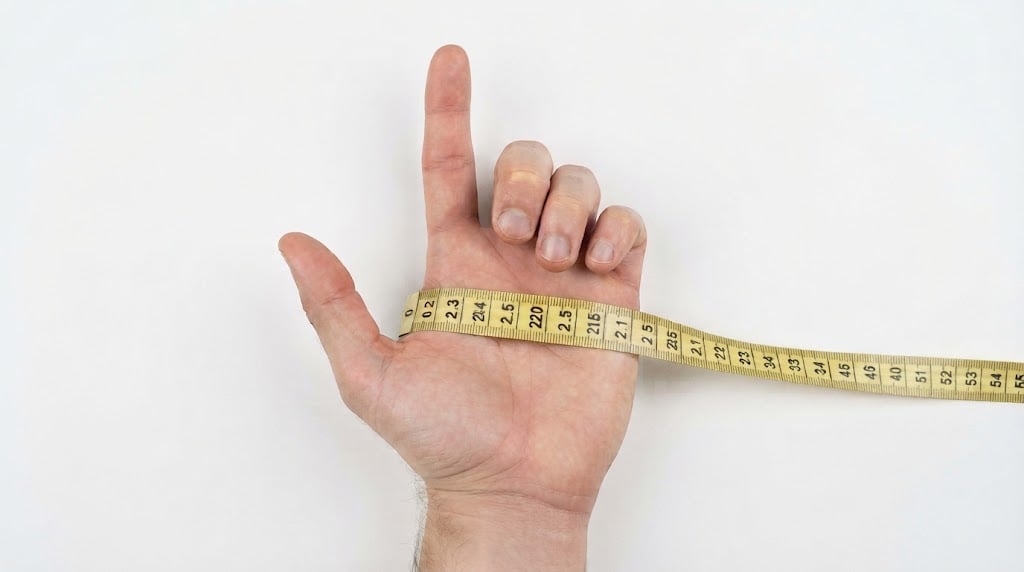
- Measure around your dominant hand with a tape measure, going around the palm just above the knuckle of your thumb, with your hand relaxed and without pulling the tape tight.
- Note the measurement in centimetres and check it against that specific manufacturer's chart: it varies between brands, so don't assume your usual size.
- Try them on with your jacket sleeve on, to check the cuff works properly and doesn't leave a gap for snow to get in.
- Make a fist with the glove on: there should be enough room to move your fingers freely, without empty space at the tips.
Indicative size chart
| Palm circumference (cm) | Size |
|---|---|
| 19 - 20 cm | S |
| 20 - 21.5 cm | M |
| 21.5 - 23 cm | L |
| 23 - 25 cm | XL |
Treat these ranges as a starting point, not a rule: glove sizing varies quite a bit between brands and it's always worth confirming the specific manufacturer's chart. If you're still putting your kit together, at Snow Riders Academy you can see what's available to rent before your lesson.
Waterproofing and insulation: the two things that matter
They're two different things that often get confused, and you need both.
Waterproofing and breathability. A glove that keeps water out but doesn't let sweat escape will still leave your hands wet, just from the inside. That's why you want membranes that do both — Gore-Tex is the best known, but every brand has its own. Check whether the model states a waterproof/breathable membrane, not just "water resistant", which is considerably less.
Thermal insulation. This is the filling that holds the heat:
- Synthetic (PrimaLoft and similar): light, insulates well and dries fast. The most practical option for most uses.
- Merino wool: keeps much of its insulating ability even when damp — it absorbs moisture without feeling wet — although it takes longer to dry than synthetic.
- Down: very warm for its weight, but it loses effectiveness when wet, so it's less common in gloves than in jackets.
More filling isn't always better: a very thick glove costs you feel, and if it makes you sweat, you end up with damp, cold hands.
Details and technologies that make a difference
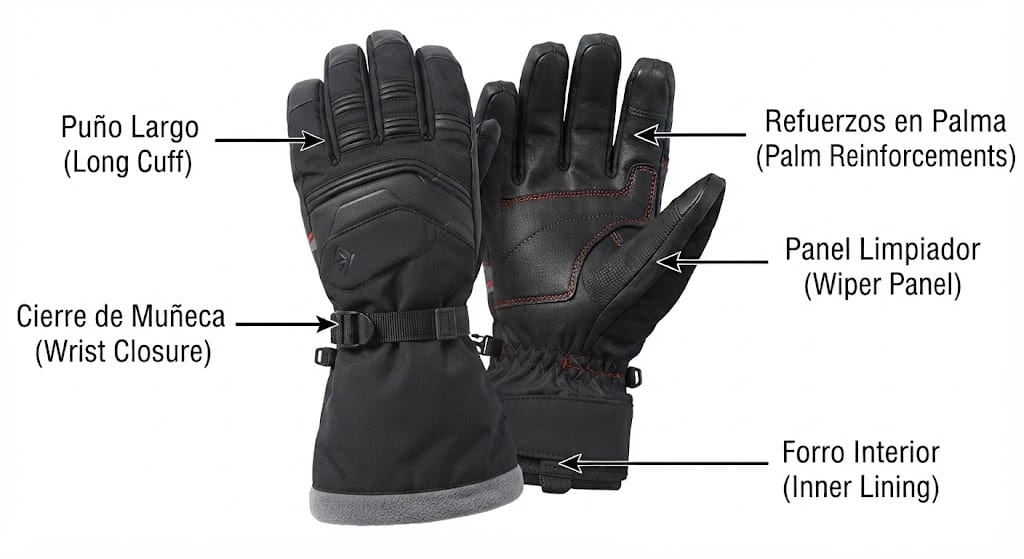
- Long or short cuff: the long cuff goes over your sleeve and seals better against snow; the short one goes underneath and is more comfortable and less bulky. It's personal preference rather than quality.
- Wrist closure: velcro or an elastic drawcord that cinches the glove and stops cold air getting in. Small detail, big difference.
- Safety leash: keeps your gloves hanging from your wrist when you take them off on the lift. Sounds minor until you drop one from a gondola.
- Reinforcement on palm and fingers: synthetic materials or leather on the high-wear areas; they extend the life of the glove considerably.
- Wiper panel: a patch of microfibre or chamois, usually on the thumb, for clearing your goggles. Very useful on snowy days — though worth using carefully so you don't scratch the lens, as we explain in the ski and snowboard goggles guide.
- Touchscreen compatibility: lets you use your phone without taking the glove off. Convenient, not essential.
- Heated gloves: they carry a battery in the cuff that generates heat. They're expensive and add weight, but they can be the answer if you're persistently cold or have a circulatory condition that makes it worse.
- Leki's Trigger system: a loop on the glove that clips straight onto the pole without a conventional strap, and releases automatically when pulled hard — in a fall, for example — which helps stop your hand staying attached to the pole. One important practical caveat: you need compatible gloves and poles from the same system; the glove on its own does nothing.
Gloves for children
With small hands everything is amplified: they get cold sooner, and children are slower to say they're cold until they're genuinely uncomfortable.
- A mitten is usually the best option: warmer, and much easier to get on — which you appreciate halfway through a lesson with already-cold hands.
- Don't buy two sizes up "so it lasts": they lose feel and let snow in at the cuff. Better the right size each season.
- Long cuff, no argument: children fall and put their hands down constantly; a cuff over the sleeve stops the gloves filling with snow.
- The safety leash genuinely helps: it cuts down on the classic glove lost from the chairlift.
- Check their hands at every stop: it's the most reliable way to catch a glove that's got wet inside before the cold becomes a problem.
If your child is taking their first lessons with us, take a look at our kids' ski and snowboard lessons.
Care and maintenance
- Dry them properly after every day, and never on a radiator or direct heat source: excessive heat can damage the membrane and harden leather. Better at room temperature, with the liner pulled out if the model allows it.
- Wash them following the manufacturer's instructions: waterproof membranes and leather need specific products and don't tolerate aggressive washing.
- Repair split seams early: a small hole lets water through, and in a couple of outings that glove has lost its waterproofing.
- If they're leather, treat them periodically with whatever product the brand specifies so they don't dry out or lose their waterproofing.
Before you buy: a quick checklist
- A waterproof and breathable membrane, not just "water resistant".
- A type matched to your use: gloves for skiing and dexterity, mittens if you get cold, three-finger as the middle ground.
- A size you actually measured, with room to move your fingers — never tight.
- A cuff and wrist closure that seal properly with your jacket.
- A removable liner if you want to dry them quickly between days.
- If you go for the Trigger system, confirm that poles and gloves are compatible.
Good gloves are the ones you don't notice: you simply get through the day without thinking about your hands. With these criteria — type, waterproofing, insulation and size — you can get it right first time and forget about it for several seasons. And if you're building the whole kit, take a look at our guides to helmets and goggles too.