
It's the cheapest garment in your kit and the one most people get wrong. A base layer isn't visible, carries no status and costs a fraction of what a jacket costs, but it determines whether you spend the day comfortable or cold from mid-morning. And it does so for a reason almost nobody is clear on: its job isn't to keep you warm. This guide is about what it actually does, how to choose the material and the weight, and about a mistake with socks that we see almost every week in lessons.
In short: close to the body but not compressing, in merino wool or technical polyester and never cotton. For skiing on piste, a weight of 180-200 g/m² is the most versatile. And on your feet, one pair of thin socks: two pairs or one very thick sock compress your foot inside the boot, restrict circulation and leave your feet colder, not warmer.
What a base layer does, and what it doesn't
The confusion starts with the name: we call them "thermals", which sounds like their function is to give you heat. It isn't.
Their job is to move sweat off your skin and outwards, where the mid layer can deal with it. Skiing is exercise: you generate heat and moisture even at −5 °C. If that moisture stays against your skin, water conducts heat far better than air and you get cold the moment you stop on the lift, even in the best jacket on the market.
Which is why a good base layer with a mid-range jacket works better than the other way round. How it fits into the whole system is in the layering guide; here we focus on the garment.
The cotton rule
If you take one thing from this article, make it this: no cotton.
A cotton T-shirt absorbs sweat, holds it against your skin and doesn't dry all day. It's exactly the opposite of what you need, and it's the number one reason someone gets cold in their first lesson. It doesn't matter how good the jacket over the top is.
Merino wool or synthetic
Those are the two real options. Neither is better at everything.
Merino wool. A natural fibre far finer than traditional wool, which is why it doesn't itch. It regulates temperature very well, keeps insulating somewhat even when damp, and has a practical advantage you notice on a trip: it takes a very long time to smell, so you can wear the same garment several days running. In exchange it's more expensive, more delicate to wash and slower to dry.
If you've tried wool before and found it itchy, look at the microns: it's the measure of fibre thickness, and technical merino runs roughly from 17.5 to 24 microns. Below about 19 microns it barely itches anyone; above 22 sensitive skin starts to notice. It's the figure that decides whether you'll wear the garment happily or leave it in the wardrobe.
Technical polyester. Dries faster than wool, is tougher and costs considerably less. Its weak point is odour: it starts to smell quickly and needs washing daily. This is where brand names like Coolmax come in — polyester with a modified fibre to spread moisture and evaporate it sooner — or Thermolite, aimed at warmth for very little weight.
Merino and synthetic blends. They aim to keep the good parts of each: wool's odour control and synthetic's toughness and drying speed. For most people it's the sensible option.
Nearly all of them also carry a small percentage of elastane, which is what makes the garment fit close and move with you.
What base layer weight do I need?
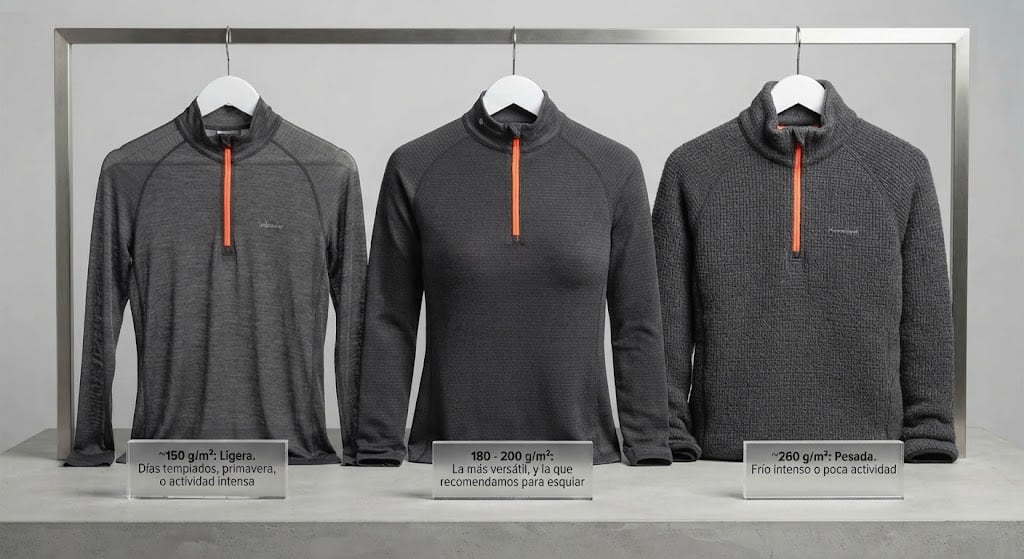
Here's the concrete figure that replaces the vague "lightweight", "midweight" and "heavyweight" labels. Weight is expressed in grams per square metre and appears on the product sheet.
| Weight | What it's for |
|---|---|
| ~150 g/m² | Lightweight. Mild days, spring, or intense activity where you sweat a lot. |
| 180 - 200 g/m² | The most versatile, and what we'd recommend for skiing on piste. |
| ~260 g/m² | Heavyweight. Hard cold or low activity; warmer but bulky and slow to dry. |
If you're only buying one, make it 180-200. And if you're torn between going up a weight or adding a better mid layer, add the mid layer: you can take that off, and you can't take off the base layer.
The fit: close, not compressed
A base layer has to sit against your skin. It isn't an aesthetic question: if it's loose, an air gap forms between the fabric and your skin, the fabric stops being in contact and can't move sweat. A loose base layer works as a T-shirt, not as a base layer.
That said, close doesn't mean tight. It should fit without compressing or digging in, and without pulling when you raise your arms.
You'll also see compression garments, with a much stronger fit. They're a separate category, designed for muscle support, and their claimed performance and recovery benefits have been debated for years without a clear conclusion. They work as a base layer for skiing, but you don't need to pay for compression to get a good one.
The details you notice five hours in
Small things that separate a technical garment from any old sports top:
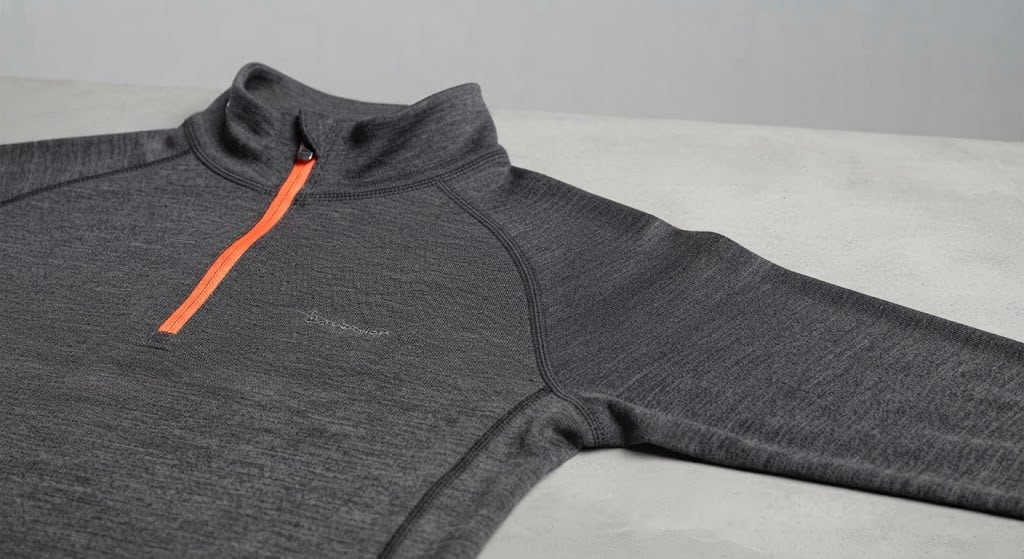
- Flatlock seams: stitched so they don't stand proud. Under the pressure of a backpack, a harness or your own trousers, a normal seam rubs; over an eight-hour day, that rubbing ends up sore.
- Raglan sleeves, with no seam on the shoulder. Exactly where a rucksack strap sits.
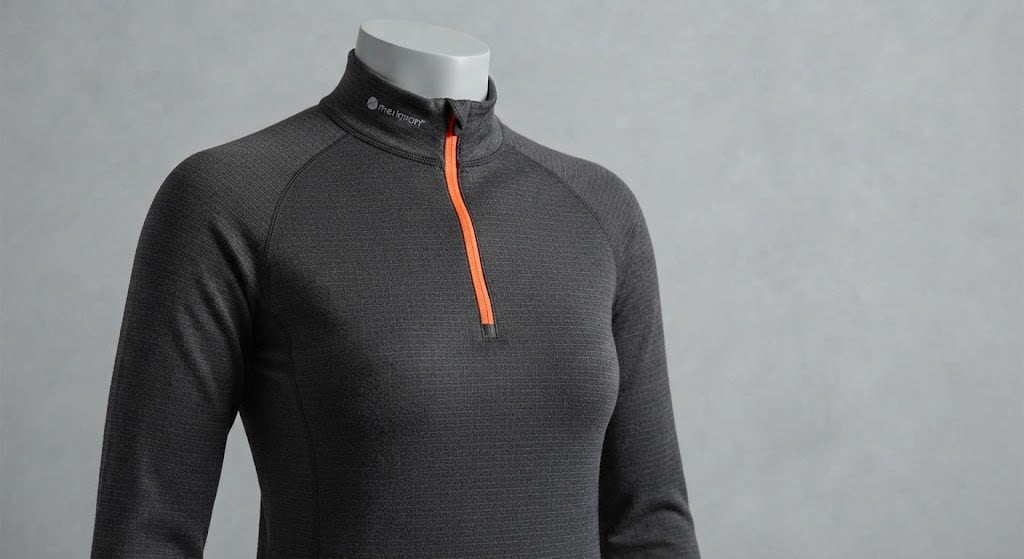
- A short zip at the neck: the fastest way to vent when you're working hard on the way up or when the sun comes out, without taking anything off.
- A slightly longer back than front, so it doesn't ride up when you crouch or fall.
- Thumb loops on some models, which seal the wrist and stop the sleeve riding up inside your glove.
Socks: where most people get it wrong
We see this almost every week, and it deserves its own section because the mistake is universal and goes in exactly the opposite direction to intuition.
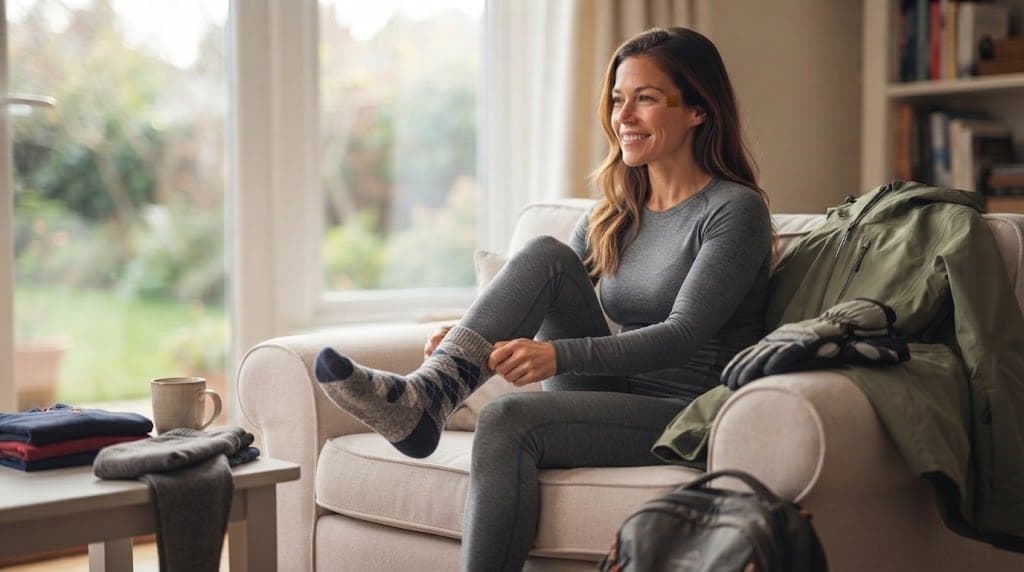
Someone with cold feet puts on two pairs of socks, or one very thick pair. And ends up colder still. The reason is simple: the boot has a fixed volume. Adding more sock compresses your foot, blood circulates worse, and the air pocket that actually insulates disappears. A tight foot is a cold foot, always.
What does work:
- One pair, never two.
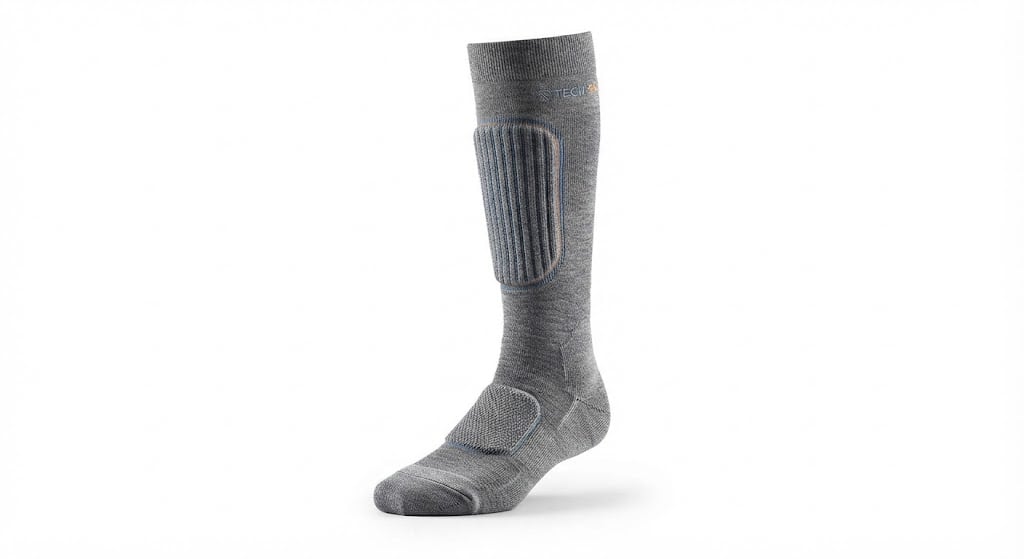
- A proper ski sock: thin in the part inside the boot, with padding only where it's needed, on the shin and instep.
- Tall, above the boot cuff. A short sock lets the edge of the boot rub against your leg directly, and that gets expensive.
- No thick seam at the toe, which is where it bothers you most in a tight boot.
- No cotton, here either.
And if you're still cold, the sock is almost never the problem: it's usually a badly fitted or over-tightened boot.
For children
Children get cold sooner and say so later, so it's worth being a little more generous here.
- Merino or a blend, rather than pure synthetic: they regulate temperature worse, and wool is more forgiving.
- A one-piece set or a long top, so their back doesn't ride up when they fall — and they fall a lot.
- One pair of socks, exactly as with adults. With small feet in rental boots, the compression effect is even more pronounced.
- Check hands and feet at every stop, which is the most reliable way to catch the cold before it's a problem.
We go through this with the families who come to our kids' ski lessons too.
Care and washing
- Cold or warm water and a gentle cycle.
- Never fabric softener: it coats the fibre and cancels out exactly the ability to move moisture.
- Air dry, flat if it's merino, and no tumble dryer or radiator: heat mats the wool and shrinks it.
- Wash merino less than you think. Airing it overnight is usually enough, and it lasts far longer that way.
What to bring to Sierra Nevada
Sierra Nevada gets a great deal of sun and spring starts here in March. With sub-zero mornings and midday sun where half your kit is surplus, the daily temperature swing is large.
- Mid weight, 180-200, and regulate with the mid layer rather than the base layer.
- A zip at the neck, which you'll genuinely appreciate at midday.
- Merino or a blend if you're here several days, for the odour question.
- In spring, a spare lightweight one: people sweat more than they expect.
You can check the snow conditions before you pack.
Before you buy: a quick checklist
- Merino wool, technical polyester or a blend. Never cotton.
- 180-200 g/m² if you're only buying one.
- If itching worries you, look at the microns: below 19 it doesn't itch.
- Close to the body, not compressing, and no pulling when you raise your arms.
- Flatlock seams and, better still, raglan sleeves.
- One pair of ski socks, tall and thin. Never two.
- Mild detergent, no softener and no tumble dryer.
A base layer has the best ratio of cost to difference of anything you'll buy. A thirty-euro technical top and a well-chosen pair of socks fix more cold than two hundred euros of extra jacket.