
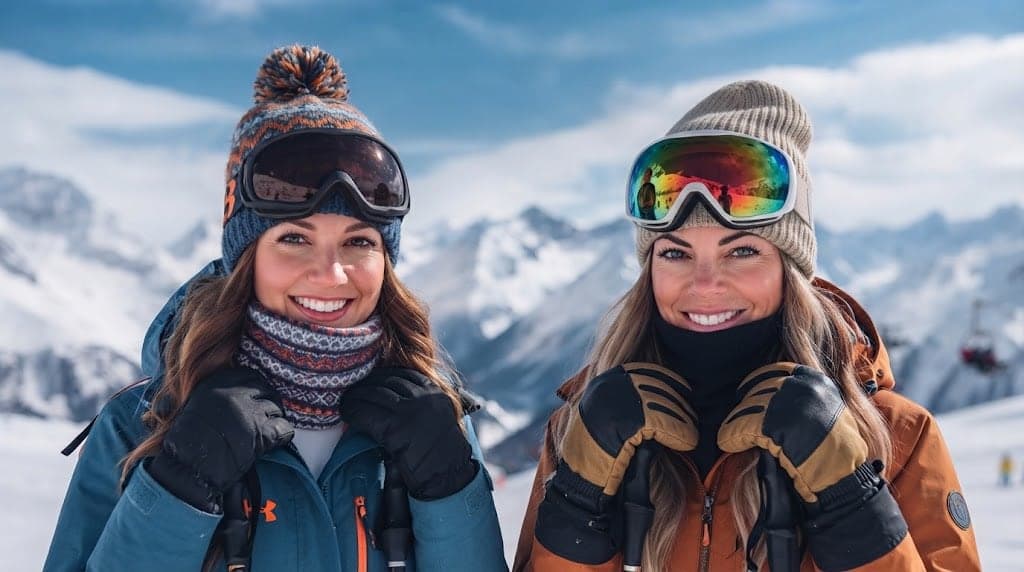
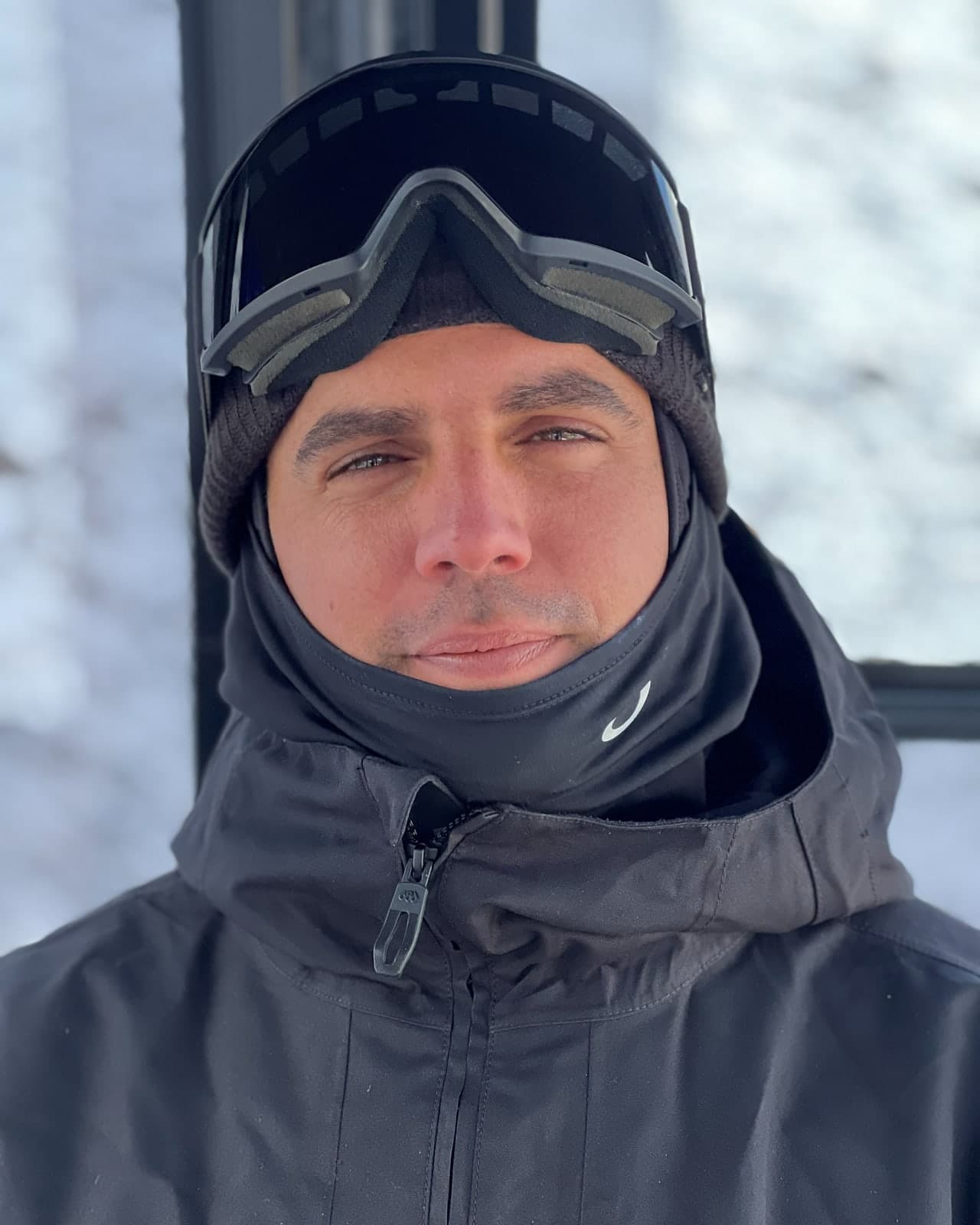
They're the cheapest items in your kit and the least thought about: a hat, a neck gaiter, and not much else. But they're behind one of the most repeated complaints on the hill — "my goggles fog up constantly" — and also behind a safety decision almost nobody realises they're making: what you put under your helmet. This guide is about the three garments that cover your head and neck, when each is needed, and about one very specific mistake that ruins a lot of people's visibility without them knowing why.
In short: with a helmet on, underneath goes a thin hat or nothing, never a thick one, because it changes the helmet's fit. The neck gaiter is the most useful of the three and the one you'll wear most. And if you pull it up over your nose, the air you breathe out goes straight up to your goggles and fogs them: look for one with a nose opening or micro-perforations at mouth level, or leave it below your nose.
Can I wear a hat under my helmet?
This is the part worth reading before you buy anything, because it isn't a question of comfort.
A helmet is fitted to your head: you choose it by the measurement of your circumference and fine-tune it with the dial at the back until it sits firmly without pinching. Anything you put between the helmet and your head changes that fit. A thick hat lifts the helmet off your skull, makes it sit higher and leaves slack where there shouldn't be any, so in an impact the helmet can move rather than stay where it should.
What does work:
- Nothing. Helmets have a liner and ear pads: they're designed to sit directly on your head, and that's what they were built for.
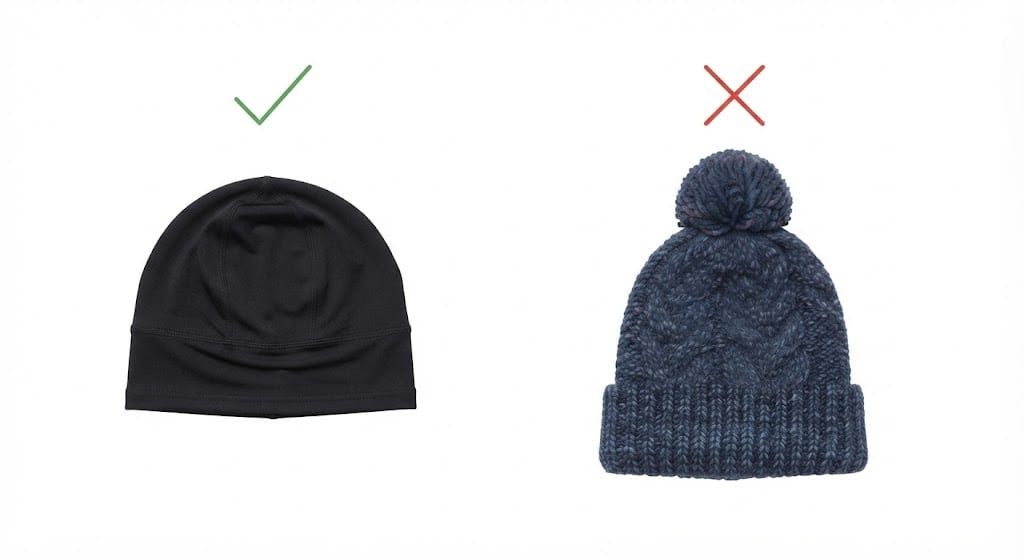
- A thin liner hat, in stretchy fabric with very little thickness, made specifically to go underneath. If you have little hair or your head gets very cold, that's the right option.
And what doesn't: your everyday wool hat. If putting it on means loosening the helmet's dial, that's already telling you it's too much. How a helmet should fit is in the helmet guide.
The hat
With a helmet on, the hat stops being a piste garment and becomes a garment for everything else: the walk to the gondola, the lunch stop, the terrace at the end of the day. That's where you appreciate it.
What to look for:
- Merino wool or a blend with synthetic. It's warm, doesn't itch if the fibre is fine and doesn't hold odour. Cheap acrylic is less warm and wets out sooner.
- That it covers your ears. That's where the cold arrives first.
- No bobble if you're going to wear it under a helmet — although, as we said, a liner is the right answer there.
On caps and visors: they're no use for skiing, because they won't fit under a helmet and don't keep you warm. For midday sun on the terrace, or for a day you aren't skiing, they're perfect. At altitude the sun is strong even in winter, so if you'll be outside for a while without a helmet, a visor helps; what it doesn't do is replace sunscreen, and we cover that in the sun protection guide.
The neck gaiter
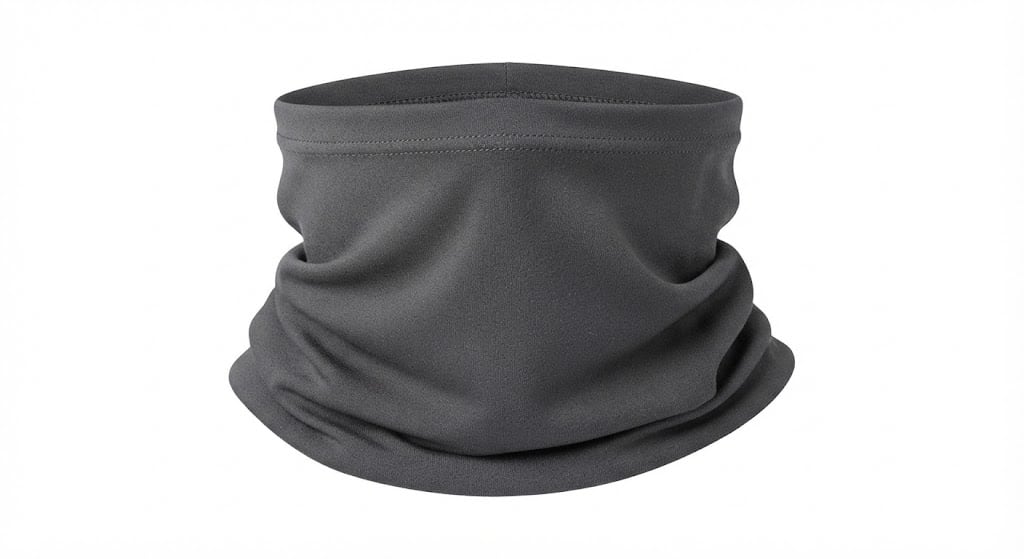
It's the most useful of the three and the one you'll genuinely wear every day. A tube of stretchy fabric covering your neck and, pulled up, the lower part of your face.
- Technical polyester for general use: dries fast and costs little.
- Merino wool if you get cold or you're here several days running, for the odour.
- With a fleece section at the neck for very cold days, though it's bulkier under the jacket.
- Long, long enough to tuck inside your jacket collar. A short gaiter rides up and leaves your neck exposed at exactly the wrong moment.
One safety note that isn't minor: no scarves. A loose scarf can catch in a chairlift, a drag lift or your own board in a fall, and that's exactly the kind of accident that isn't worth risking. A gaiter does the same job with nothing hanging.
Why do my ski goggles fog up?
This is the section most people need to read, because the problem is constant and the cause is almost never identified.
When it's cold, the instinct is to pull the gaiter up over your nose. And when you do, here's what happens: the air you breathe out, warm and full of moisture, no longer goes forwards; the gaiter redirects it upwards, straight into the gap between your face and the lens. There it meets a cold lens and condenses. Result: fogged goggles within two minutes, over and over, however often you wipe them.
It's the number one cause of fogged goggles, and it isn't fixed with the goggles but with the gaiter:
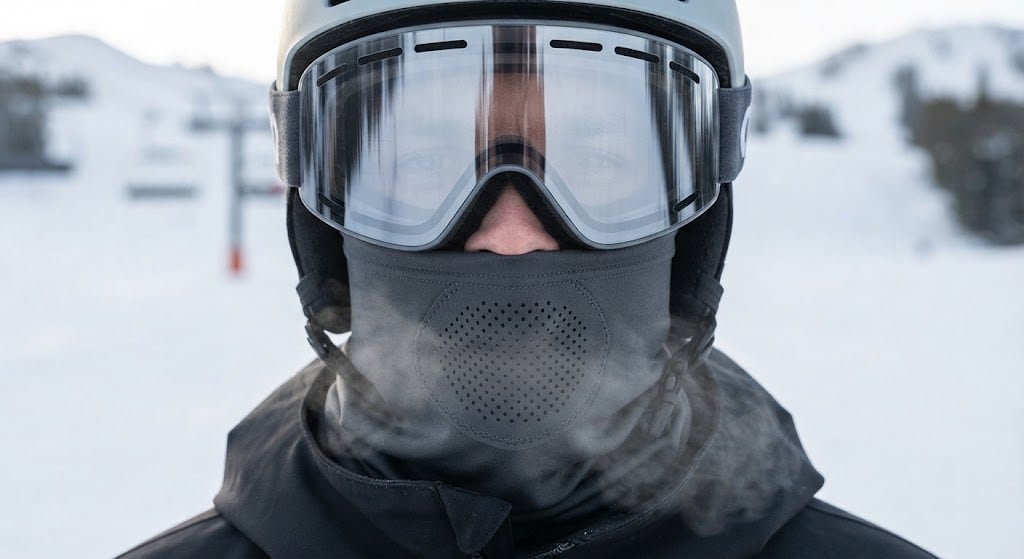
- Gaiters with a nose opening or micro-perforations at mouth level, which let the air out forwards instead of channelling it upwards.
- One that fits properly over the bridge of your nose, without leaving an open channel towards your eyes.
- Or simply leave it below your nose. Free, and it works.
And an important warning: never rub the inside of fogged goggles. The inner surface carries an anti-fog coating that's destroyed by rubbing, and from then on they'll fog every time. Shake them out and let them air dry. We go into all of this in the goggles guide.
The balaclava
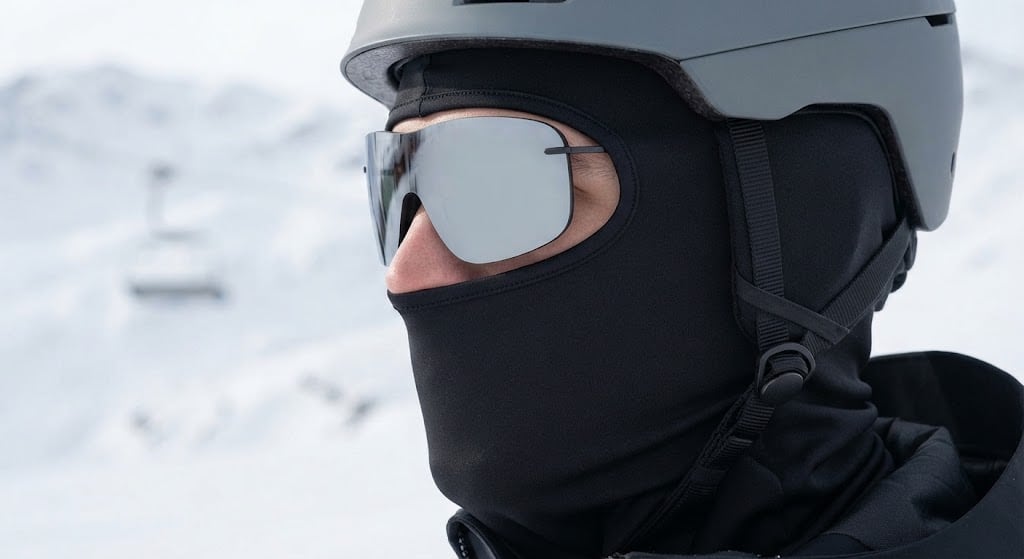
It covers your head, neck and much of your face in one piece. It's more garment than most people need on a normal day on piste, and it makes sense in specific cases:
- Days with strong wind or very low temperatures, when a hat and gaiter fall short and leave gaps.
- Freeride and ski touring, where you're exposed for longer and further from shelter.
- Children, because they can't shift it or lose it, which is a real problem with gaiters.
Look for a thin one if it's going under a helmet — the same rule as with the hat applies — and with a well-sized face opening, because a balaclava that presses on your nose reproduces the fogging problem.
Magnetic systems between goggles and gaiter
Some brands sell goggles with a face mask that attaches magnetically, so goggles and gaiter sit together with no gap between them. Anon's MFI system is the best known.
They solve the gap between goggles and face well, which is a real entry point for cold air. The trade-off is that they tie your hand: they require you to buy the goggles and the mask from the same brand. If you'd rather not depend on a proprietary system, a well-positioned gaiter with a vent opening achieves nearly the same for far less money.
Protection for your neck and face
There's one thing these garments do that almost nobody takes into account: covering up is the most effective sun protection there is.
On snow the radiation doesn't only come from above: it bounces. Snow reflects up to 80% of UV radiation, which means the underside of your neck, your chin and the area below your nose take sun from an angle people never protect. A gaiter pulled up covers exactly that area, and unlike sunscreen it doesn't need reapplying every two hours.
It doesn't replace sunscreen on the parts left uncovered, but it greatly reduces the exposed surface. We cover it in detail in the sun protection guide for snow.
What to bring to Sierra Nevada
Here the sun matters more than the cold, and that changes the list.
- A gaiter always, and in spring more for the sun than for the cold.
- A thin hat under the helmet only if you genuinely need it; most days it's surplus.
- A normal hat in your bag for the lunch stop and afterwards.
- A balaclava only on days with strong wind or if you go off-piste.
- Two gaiters if you're here several days, because it gets damp from your breath more than you'd think.
You can check the snow conditions before you pack.
Before you buy: a quick checklist
- Under the helmet: nothing, or a thin liner hat. Never a thick one.
- A long gaiter, long enough to tuck inside your jacket collar.
- With a nose opening or micro-perforations at mouth level, if you're going to pull it up.
- Merino wool or a blend if you're here several days; polyester if price matters.
- No scarves: they hang and catch in lifts.
- A balaclava only for strong wind, extreme cold, off-piste or children.
- A cap for the terrace, never for skiing.
That's thirty or forty euros in total, and it fixes two of the most irritating problems of a day on snow: an exposed neck and fogged goggles. Very little of your kit gives back that much.